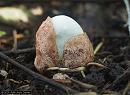
Claustulaceae are a small family of gasteroid or secotioid basidiomycetes, characterised by partially enclosed fruitbodies in which the hymenium does not fully expand to form an open mushroom cap. The basidiome is typically globose to irregular, with a peridium enclosing a chambered or labyrinthine gleba. As the fruitbody matures, the peridium may split irregularly, exposing the fertile interior.
These fungi represent evolutionary transitions between agaricoid mushrooms and fully gasteroid forms, often associated with dry or windy environments where enclosed spore production is advantageous.
laustula is a small genus of gasteroid basidiomycetes producing globose to subglobose fruitbodies with a thick, whitish peridium enclosing a chambered or labyrinthine gleba. The fruitbody remains fully enclosed until maturity, at which point the peridium may split irregularly to expose the fertile interior. The exterior surface is typically smooth, white to cream, sometimes discolouring with age.