E. Horak 1973
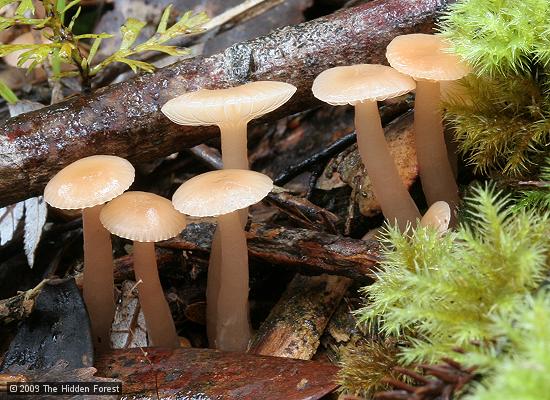
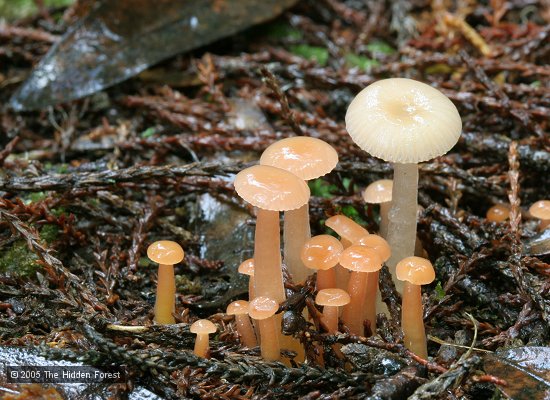
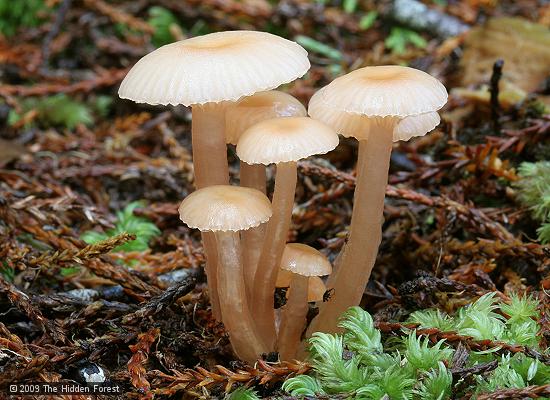
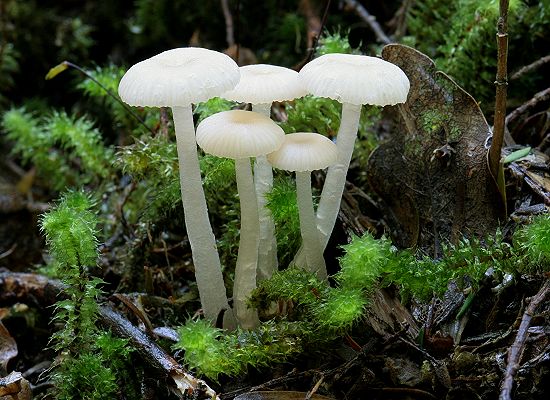
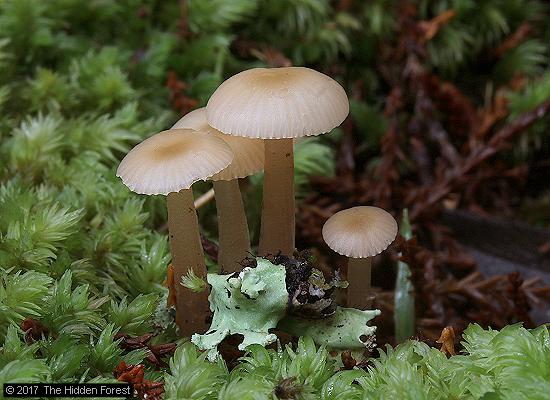
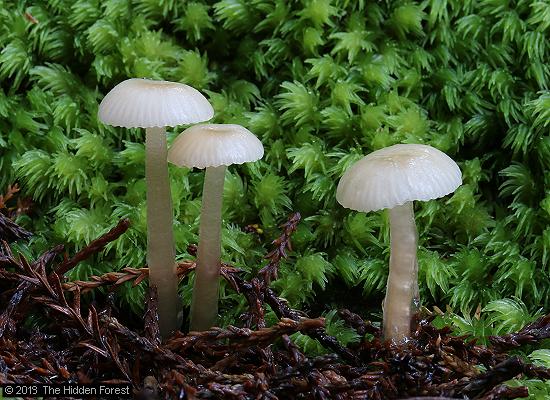
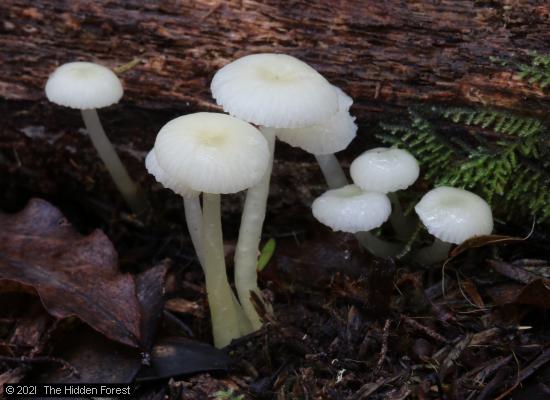
A small, pale, strongly glutinous Gliophorus with creamy‑beige colours fading to white with age, decurrent whitish lamellae, and a hyaline gelatinous gill‑edge thread. The clustered habit, pallid palette, and narrow ixocutis hyphae make it a distinctive member of the genus.
Note: Some Gliophorus species possess UV-labile pigments, and their colours may shift or fade as basidiomes age, particularly after exposure to sunlight. This photochemical change is independent of hygrophany and may cause green, lilac, red, or fuliginous tones to bleach white or toward pink, grey or yellow depending on species.
Pileus: 5-20 mm diam., convex, later plane or umbilicate. Colour creamy to beige, becoming lighter with age fading to white. Surface glutinous; margin thin, membranaceous, and translucidly striate when moist.
Lamellae: broadly adnate to decurrent, pallid orange, later whitish. Gill edge with a hyaline, gelatinous thread.
Stipe: 15-40 x 2-3 mm, cylindric, whitish or pinkish, base with ochraceous tints. Entire stipe glutinous; solid; often clustered.
Context: whitish.
Odour/tast: not distinctive.
Common name: None
Habitat: Nothofagus and Lowland podocarp-broadleaf forest
Substrate: Saprobic, on soil amidst leaf litter
Distribution: New Zealand wide
Season: Autumn to early winter
Biostatus: Indigenous, non-endemic
Edible: No
Spore print: White