(Bals.-Criv.) Vuill. (1913)
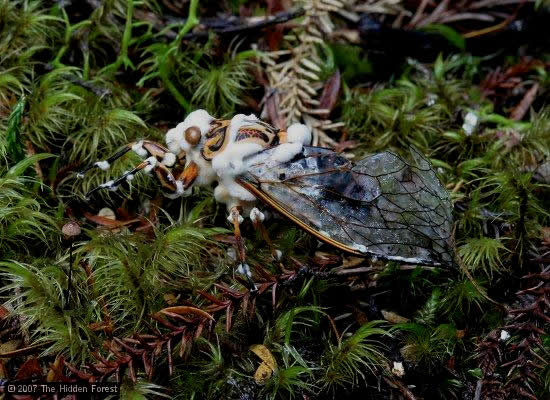
A widespread, white, powdery insect-pathogenic fungus that envelops its host in a dense layer of white conidiophores and conidia, giving the insect a “frosted” or “chalk-covered” appearance.
Hosts die attached to vegetation, lying in leaf litter, or partially buried in soil.
This species is the primary cause of white muscardine disease in insects and is widely used as a biological control agent.
Infected insects become: white, powdery, chalky, or dusted often mummified sometimes distorted or shrunken covered in a fine bloom of conidia No stromata are produced (unlike Cordyceps).
Hosts: Extremely broad host range, including: moths and butterflies (Lepidoptera) beetles (Coleoptera) flies (Diptera) true bugs (Hemiptera) and many other small insects. This is one of the few insect pathogens that can infect both larvae and adults.
Habitat: Occurs wherever insect hosts are present: forest litter, soil, vegetation, rotting logs, and agricultural environments. Common in humid microhabitats.
Distribution:
Cosmopolitan. Very common in New Zealand, both naturally and through biocontrol introductions.