Family: Phallaceae Navigation HelpSymbol keyFamily Tree
line
Fungi:> Basidiomycota:> Basidiomycetes:> Gomphales:> Phallaceae:> Aseroe, Anthurus, Ileodictyon, Pseudocolus, Mutinus.
line
This family is one of the most strange in the fungus kingdom. Its members attract insects most often flies, for spore dispersal and to this end they mimic the smell of dung. Soon after hatching, the stench from the stink horn is detected by insects which come to feed on it, and when they leave they carry away spores on theirs bodies and in what they eat, to be deposited later far away from the parent fungus. Snails and slugs also help with spore dispersal.
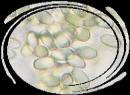
Spores
line
Genus: Aseroe  
line
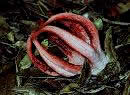
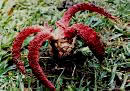
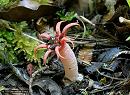
This fungi comes in a widely deferent forms some times with a long stipe and long orange tentacles. While at other times it has a relatively short, wide stipe with long red tentacles or a mixture of these basic shapes. Its believed that the orange tentacle are the result of nutrient deficiencies.  
line
Species: Aseroe rubra La Bill.: Fr.
More imagesMore imagesAseroe rubra
Common Name: Flower Fungus
Found: Native Forest
Substrate: Forest floor
Spore: Brown
Height: 140 mm
Width: 100 mm
Season: Autumn
Edible: No
line
Genus: Anthurus  
line
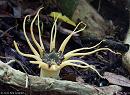
Species: Clathrus archeri (Berk.) E. Fisch.
More imagesClathrus archeri
Common Name: Giant Stink horn
Found: Private Farm
Substrate: Open farm land
Spore: Brown
Height: 100 mm
Width: 200 mm
Season: Autumn
Edible: No
line
Genus: Ileodictyon  
line
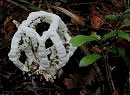
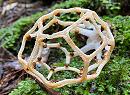
Ileodictyon cibarium is the common basket fungus found in both native bush and wood chip mulch. Recently a new species has been found in sand dunes which is very similar.  
line
Species: Ileodictyon cibarium Tul.
The common basket fungus, which once it's expanded, rolls easily away from it's volva. With the olivaceous spore mass lining the inner surface of the white basket.
More imagesIleodictyon cibarium
Common Name: Basket Fungus
Found: Native forest
Substrate: Forest floor
Spore: Brown
Height: 200 mm
Width: 200 mm
Season: Autumn
Edible: No
line
Genus: Pseudocolus  
line
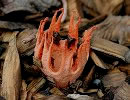
Species: Pseudocolus javanicus (Penzig) Lloyd.
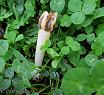
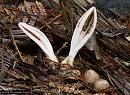
Like a small slender pale Clathrus archeri with 3 to 4 arms. Which remain white or may turn red or orange at their tips which are always joined.
  Pseudocolus javanicus
Common Name: None
Found: Native Forest
Substrate: Forest Floor
Spore: Brown
Height: 120 mm
Width: 25 mm
Season: ?
Edible: No
line
Genus: Mutinus  
line
Species: Mutinus borneensis Ces., Atti dell'
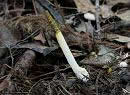
Has a receptacle like a thick white thumb, rising to 10 cm tall from a whitish volva formed by the split peridium.
More imagesMutinus borneensis
Common Name: Yellow stinkhorn
Found: Podocarp and Mixed Native forest
Substrate: Growing from wood
Spores: ?
Height: 100 mm
Width: 8 mm
Season: Summer to autumn after rain
Edible: No
line
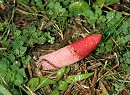
Species: Mutinus ravenelii More imagesMutinus ravenelii
Common Name: Yellow stinkhorn
Found: Organic material
Substrate: Ground
Spores: ?
Height: 100 mm
Width: 8 mm
Season: Autumn after rain
Edible: No
line
Species: Protubera nothofagi More imagesProtubera nothofagi
Common Name: None
Found: Nothofagus Forests
Substrate: Ground
Spores: ?
Height: 40 mm
Width: 40 mm
Season: Autumn
Edible: No
line
Unidentified  
line

The fungi below seams to be a little bit of a mystery some consider it to be a large Aseroe rubra others Anthurus archer but nether seam to fit there descriptions well. This is has become common with the popularity of using wood chip as a mulch. Also known to have both orange and yellow forms.

 
line

Species: Clathrus species
This stinkhorn has a hollow stem-like base whitish or pinkish contained at first within the volva but which may continue to elongate with 4 to 8 scarlet arms rise from the stem top which divide in two. The tips of which are joined to the adjacent pair when young which breaks free as it ages.

More imagesMore imagesClathrus sp.?
border
Common Name: Kings Crown
Found: Urban Gardens
Substrate: Wood chips
Spore: Brown
Height: 100 mm
Width: 200 mm
Season: Autumn to Spring Edible: No
line
Hidden Forest | Forest Fungi | Site Map Page top