Gliophorus psittacinus
(Schaeff.) Herink 1958
Description:
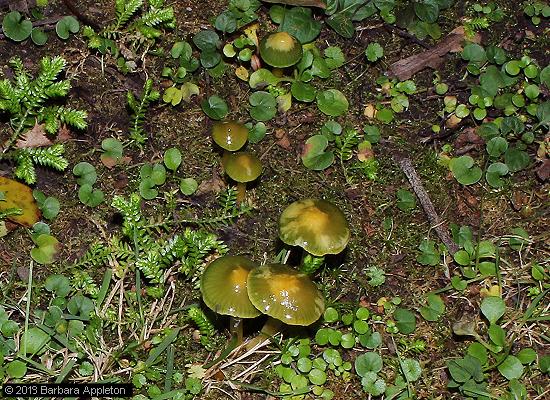
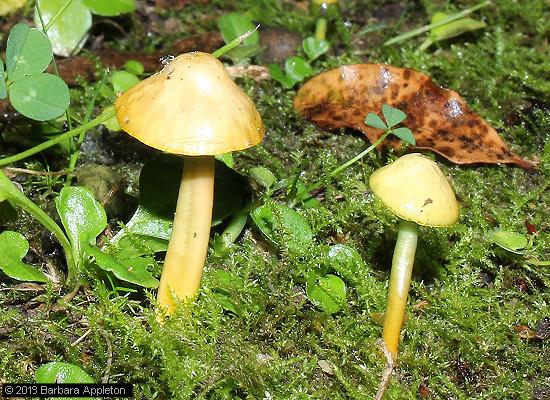
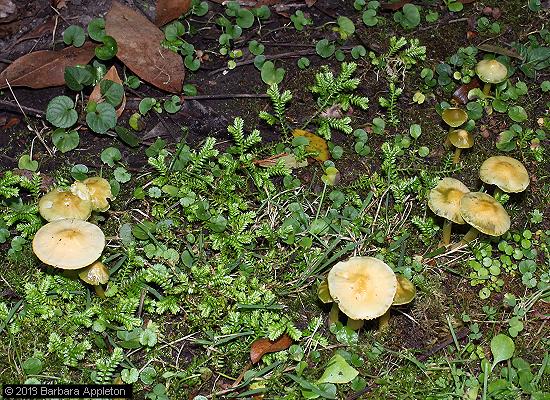
A small, extremely slimy, colour-changing waxcap that begins bright parrot-green and fades through yellow, orange, pink, or straw-brown. It is a classic grassland waxcap and the only Gliophorus you are likely to encounter in NZ pastures.

Note:Some Gliophorus species possess UV-labile pigments, and their colours may shift or fade as basidiomes age, particularly after exposure to sunlight. This photochemical change is independent of hygrophany and may cause green, lilac, red or fuliginous tones to bleach white or towards pink, grey or yellow, depending on the species.

Pileus: 5-25 mm across; hemispheric to convex to nearly flat; very slimy; colours highly variable but typically dark green when young, fading to orangish-yellow, sometimes pinkish, and finally dull straw yellow. Margin often thinly lined.
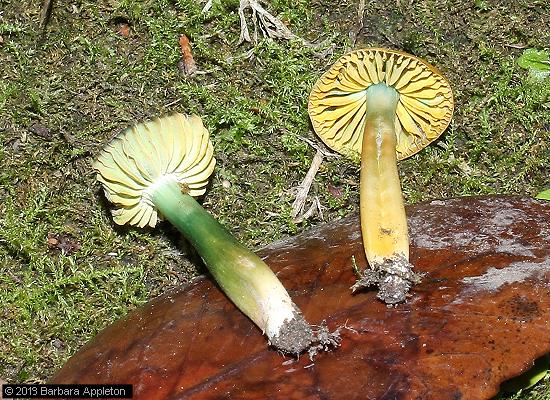
Lamellae: Narrowly attached (adnate/adnexed); close to nearly distant. pale green to yellowish, sometimes orange-yellow; edges yellowish
Stipe:
10-40 mm x 2-3 mm; equal; very slimy; pale green above and orangish-yellow below when young; later, pale yellow overall.
Context: Whitish, thin.
Odour/tast: Mild or slightly foul; slime slightly acidic

Common name: Parrot Waxcap
Habitat: Grassland
Substrate: Saprobic, on soil amidst grass
Distribution: New Zealand wide
Season: Autumn to early winter
Biostatus: Exotic
Edible: No
Spore print: White
Macro images:
Gliophorus psittacinus
Scale bar
PDD 117471    Scale= 10 mm.
 
Gliophorus psittacinus
Scale bar
Scale= 5 mm.
 
Gliophorus psittacinus
Scale bar
Scale= 5 mm.
 
Gliophorus psittacinus
Scale bar
Scale= 10 mm.
 
The Hidden Forest
Forest Fungi