Gliophorus pallidus
E. Horak 1973
Description:
PDD 88056, PDD 88151
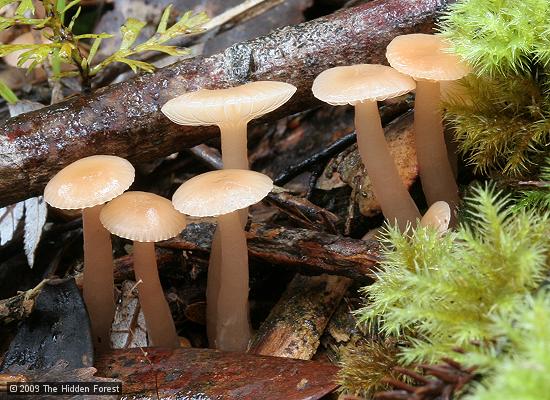
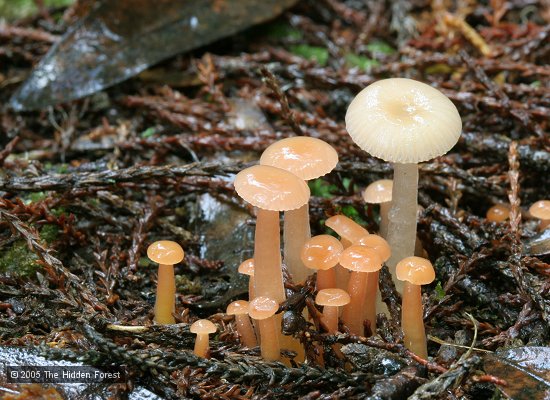
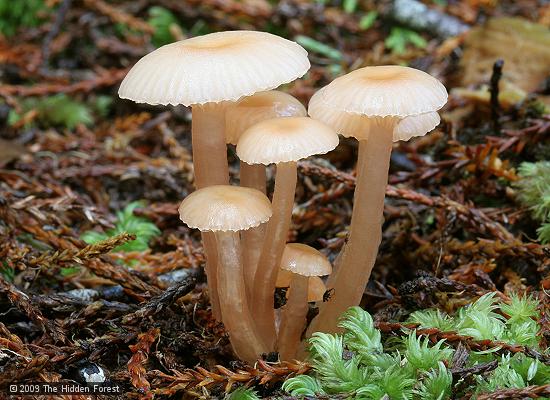
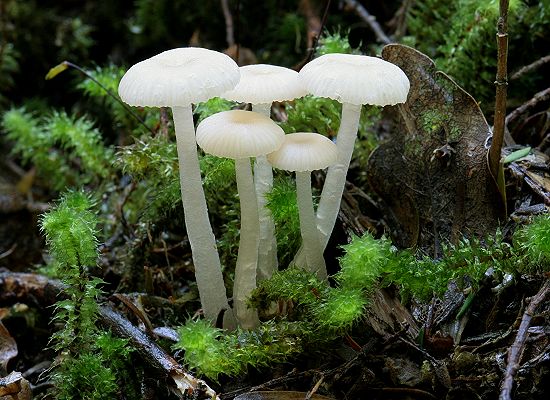
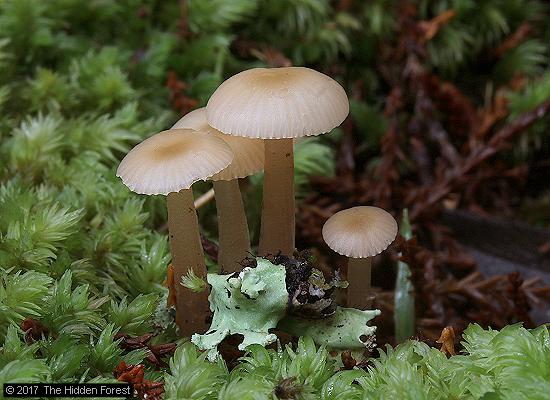
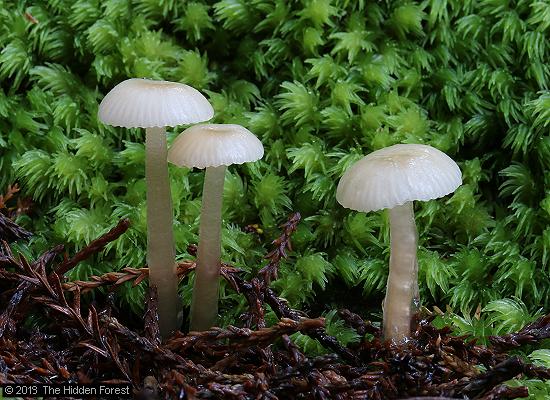
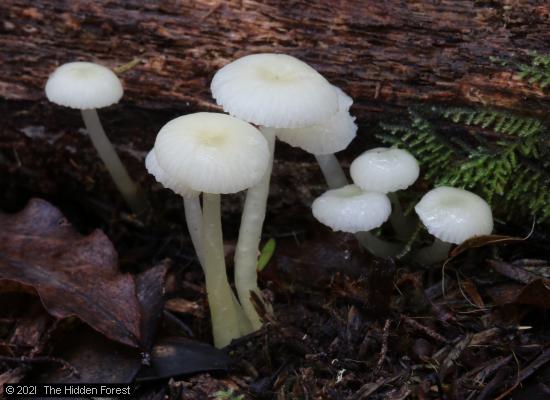
A small, pale, strongly glutinous Gliophorus with creamy‑beige colours fading to white with age, decurrent whitish lamellae, and a hyaline gelatinous gill‑edge thread. The clustered habit, pallid palette, and narrow ixocutis hyphae make it a distinctive member of the genus.

Pileus: 5-20 mm diam., convex, later plane or umbilicate. Colour creamy to beige, becoming lighter with age fading to white. Surface glutinous; margin thin, membranaceous, and translucidly striate when moist.
Lamellae: broadly adnate to decurrent, pallid orange, later whitish. Gill edge with a hyaline, gelatinous thread.
Stipe: 15-40 x 2-3 mm, cylindric, whitish or pinkish, base with ochraceous tints. Entire stipe glutinous; solid; often clustered.
Context: whitish.
Odour/tast: not distinctive.

Common name: None
Habitat: Nothofagus and Lowland podocarp-broadleaf forest
Substrate: Saprobic, on soil amidst leaf litter
Distribution: New Zealand wide
Season: Autumn to early winter
Biostatus: Indigenous, non-endemic
Edible: No
Spore print: White
Macro images:
Gliophorus pallidus
Scale bar
Scale=7 mm.
 
Gliophorus pallidus
Scale bar
Scale=6.6 mm.
 
Gliophorus pallidus
Scale bar
Scale=6 mm.
 
Gliophorus pallidus
Scale bar
Scale=5 mm.
 
Gliophorus pallidus
Scale bar
Scale=6.5 mm.
 
Gliophorus pallidus
Scale bar
Scale=6.6 mm.
 Old fruiting body's showing the loss of colour.
Gliophorus pallidus
Scale bar
Scale=6.5 mm.
It's not uncommon to find this species with a slight yellow tinge, these even dry a different colour. I suspect theses maybe a diffrent species
 
The Hidden Forest
Forest Fungi