Gloeocantharellus novae-zelandiae
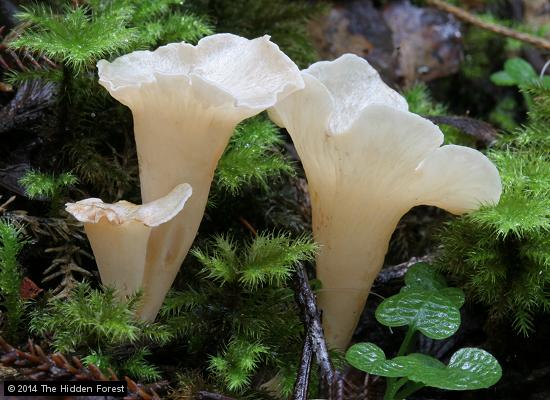
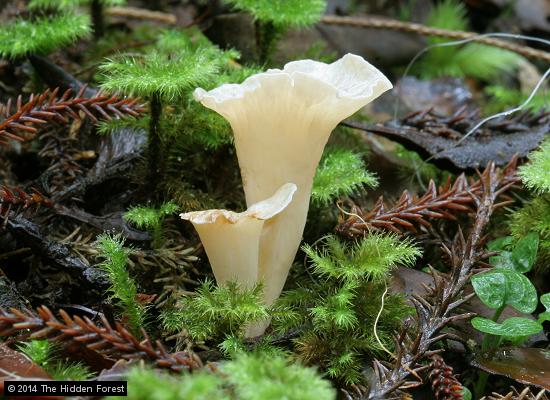
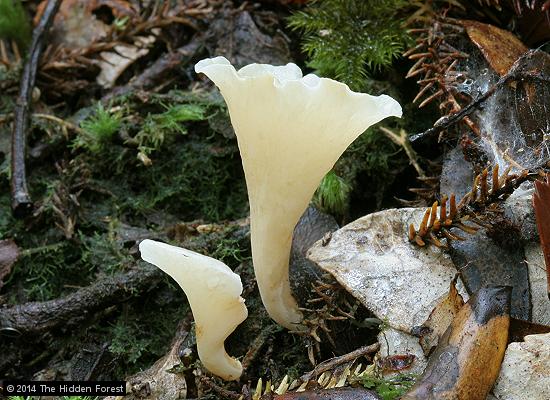
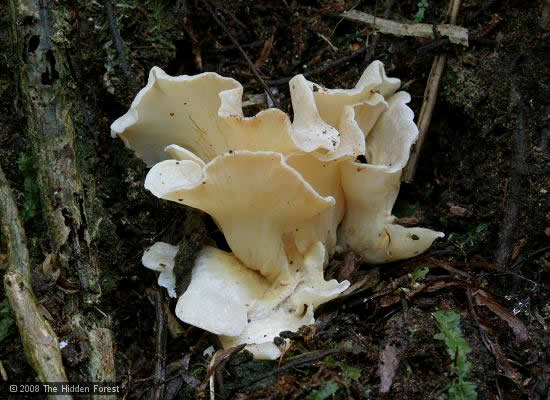
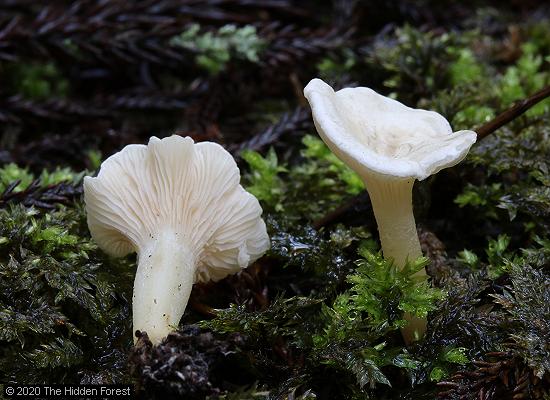
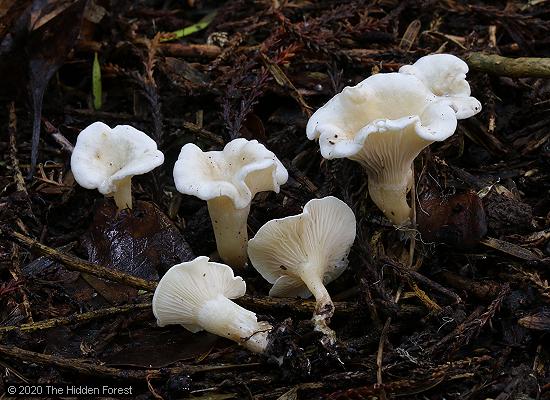
Small orange‑brown funnel fungus with a veined or wrinkled underside rather than true gills. Soft, thin‑fleshed, and found on soil or litter in native forest. A distinctive and rarely recorded NZ species of the Gomphaceae.
Fruitbody: Small to medium‑sized funnel‑shaped basidiome, typically 20–50 mm tall. Cap white to cream, becoming paler toward the margin. Surface smooth to finely velvety when young, later more matt. Margin initially incurved, then expanding and often wavy or irregularly lobed.
Hymenophore: Underside with wrinkled, veined, or shallowly folded ridges, not true gills. Ridges decurrent, often forking or anastomosing, paler than the cap or concolorous. This veined hymenophore is the key feature distinguishing the genus.
Stipe: Slender, cream to pale white, smooth, sometimes slightly paler at the base. Often central but may be slightly off‑centre in irregular specimens.
Flesh: thin, soft, and pliant.
Common name: None
Habitat: Lowland podocarp-broadleaf forest
Substrate: Saprobic on soil
Distribution: New Zealand
Season: Autumn to early winter
Biostatus: Endemic to New Zealand
Edible: No
Spore print: Tobacco brown