Geoglossaceae
Common Names
Species Menu
Family Menu
Identification Guide
Fungi:> Ascomycota:> Ascomycetes:> Leotiomycetidae:> Helotiales:> Geoglossaceae:> Geoglossum, Glutinoglossum, Microglossum, Trichoglossum.
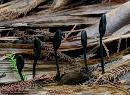
The Geoglossaceae are a small family of earth-tongue fungi, producing club to tongue-shaped, dark, fleshy ascocarps that arise from soil, moss, or decaying plant material. The fertile surface covers the entire upper portion of the club, with asci embedded in a dark, often olive-brown to black hymenium. Spores are typically elongate, multiseptate, and smooth. Members are saprotrophic, favouring damp forest litter and mossy ground, and are most diverse in temperate regions, including New Zealand.
Genus: Geoglossum
Dark brown-black to jet-black, club- to tongue-shaped, typically 20-80 mm tall. Fertile portion forming the upper expanded head, sharply or gradually differentiated from the sterile stipe. Surface smooth, never setose.
Geoglossum australe Geoglossum australe
Genus: Glutinoglossum
There are dark, glutinous earth-tongues with smooth, moist-shining fertile heads and slender brown-black stipes. Distinguished by their viscid surface and septate spores.
Glutinoglossum methvenii Glutinoglossum methvenii
Genus: Microglossum
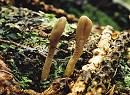
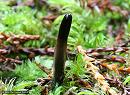
Smooth, green- to brown-coloured earth-tongues with slender clubs and a distinct fertile head. Lacking setae and usually less viscid than Glutinoglossum. Includes several unresolved NZ forms, often moss-associated.
Microglossum species Microglossum species
Unidentified species 
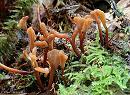
Below is a species I have been unable to identify, likely because it has not yet been described (named) or sequenced.

Microglossum olivaceumGeoglossaceae species
Genus: Trichoglossum
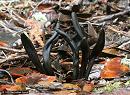
Trichoglossum are the hairy earth‑tongues, instantly recognised by their dark setae covering the fertile head and often the stipe, and by their multiseptate spores.
richoglossum hirsutum Trichoglossum hirsutum
 
The Hidden Forest   Forest Fungi