Cortinarius cardinalis
(E. Horak) G. Garnier 1991
Description:
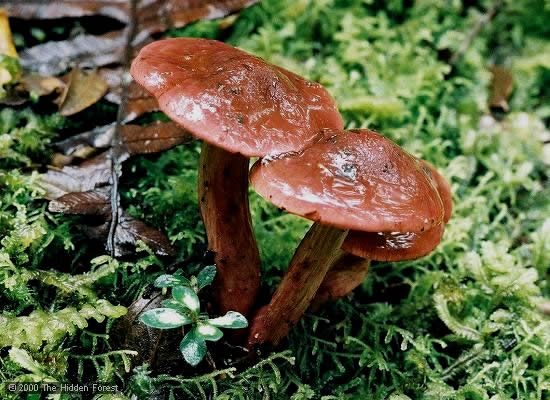
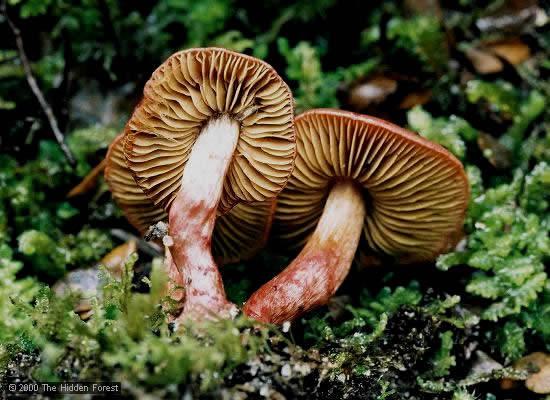
A medium-sized crimson to wine-red cortinarius, striking for its red to purple pileus, deeply coloured stipe fibrils, apricot to golden lamellae, and raphanoid odour/taste. The species is characteristic of Nothofagus forest, especially N. solandri var. cliffortioides, and is one of the more vividly coloured red Dermocybe-like taxa in New Zealand.

Cap: Up to 50 mm diam.; convex to conico‑convex to broadly umbonate‑expanded, sometimes campanulate. Colour crimson red, red‑brown, wine red, or purple, darker at centre, paler toward margin. Surface viscid to subglutinous when moist; radially fibrillose when dry. Margin striate; hygrophanous. No veil remnants at margin.
Lamellae: 15-20 primary lamellae, with 3-7 tiers of lamellulae. Attachment broadly adnate to emarginate, sometimes subdecurrent with a short tooth. Shape ventricose, up to 6 mm wide. Colour apricot, golden yellow, or ochre when young, turning orange to rust brown with age. Edges entire, concolorous.
Stipe: Up to 80 x 6 mm (base to 12 mm diam.); subclavate to fusoid, rarely cylindrical; solitary or cespitose. Apex yellow to orange. Below the cortina, the stipe is densely covered with brilliant red‑brown, crimson, or purple coarse fibrils or agglutinated veil zones. Surface dry, except for fresh veil remnants. Hollow at maturity.
Context: Red in pileus, red‑brown in stipe base.
Odour/taste: Raphanoid.

Common name: None
Habitat: Nothofagus forests
Substrate: On soil.
Distribution: New Zealand wide.
Season: Autumn to early winter
Biostatus: Endemic to New Zealand
Edible: No
Spore print: Rust brown
Macro images:
Cortinarius cardinalis
Scale bar
Scale= 11 mm.
 
Cortinarius cardinalis
Scale bar
Scale= 11 mm.
 
The Hidden Forest
Forest Fungi