Cortinarius olivaceoniger
(E. Horak) G. Garnier 1991
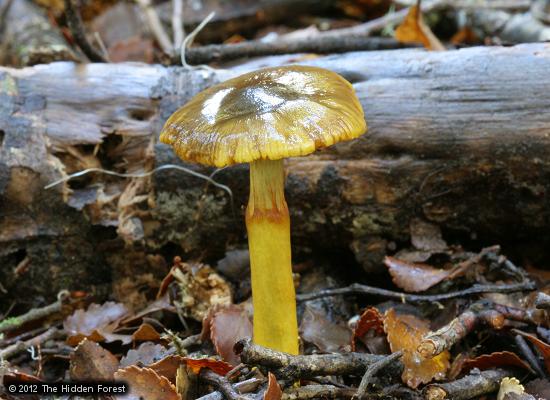
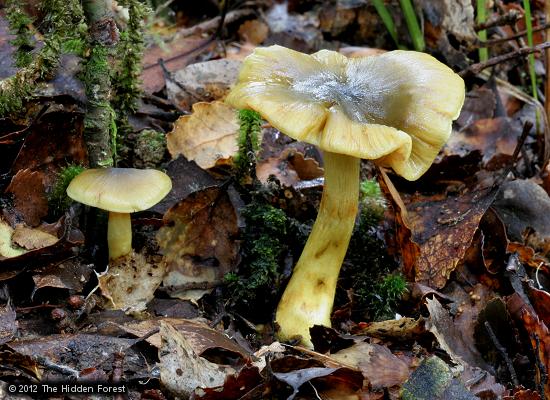
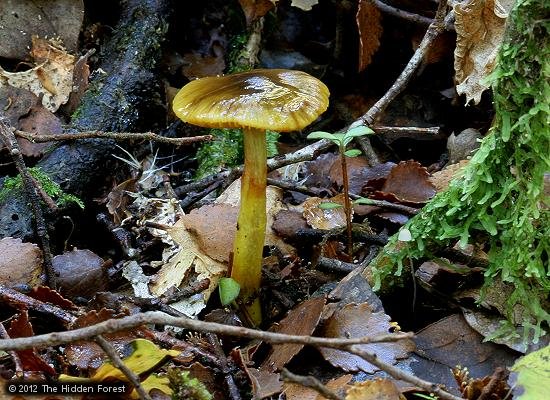
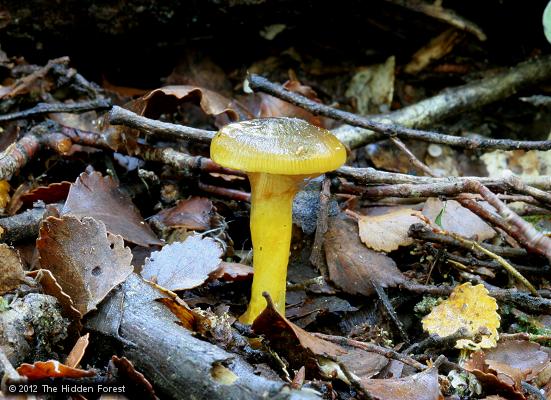
A small olive–yellow species with a fuliginous to olive‑brown disc fading to bright olive‑yellow margins, and a subgelatinous to viscid cap that becomes striate when moist. A distinctive olive‑toned species of New Zealand Nothofagus forest.
Cap: Up to 40 mm diam.; convex to broadly umbonate or obtusely campanulate. Centre fuliginous to olive‑brown, margin olive‑yellow to bright yellow. Surface subgelatinous to viscid, hygrophanous, striate when moist; no veil remnants. Finely innate‑fibrillose.
Lamellae: 10-26, with ~7 tiers; emarginate, sometimes subdecurrent with a tooth; up to 6 mm wide. Colour dark yellow with a greenish tinge, turning yellow‑rust brown. Edges concolorous, entire.
Stipe: Up to 70 x 4 mm (to 13 mm at base); slender, fusoid to subbulbous, rarely cylindrical. Colour yellow to olive‑yellow; sometimes with yellow rhizoids. Glutinous from base to the evanescent cortina; longitudinally fibrillose when dry. Solid, becoming hollow.
Context: Olive‑brown in pileus and stipe; yellow beneath the stipe cuticle.
Odour/taste: Odour and taste raphanoid (raw‑potato‑like).
Common name: None
Habitat: Nothofagus forest
Substrate: On soil.
Distribution:
New Zealand wide
Season: Autumn to early winter
Biostatus: Endemic to New Zealand
Edible: No
Spore print:
Rust brown