(Soop) Niskanen & Liimat. 2022
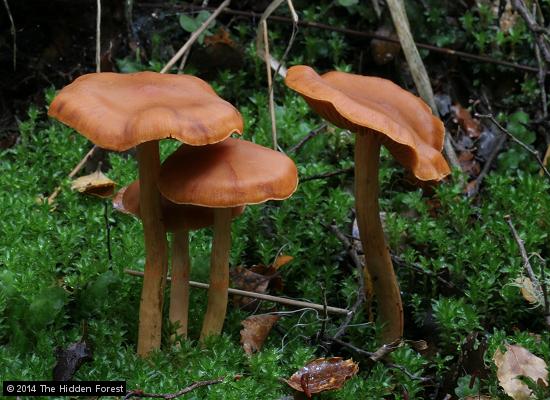
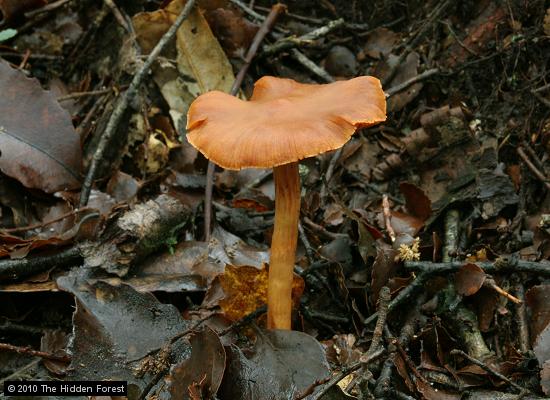
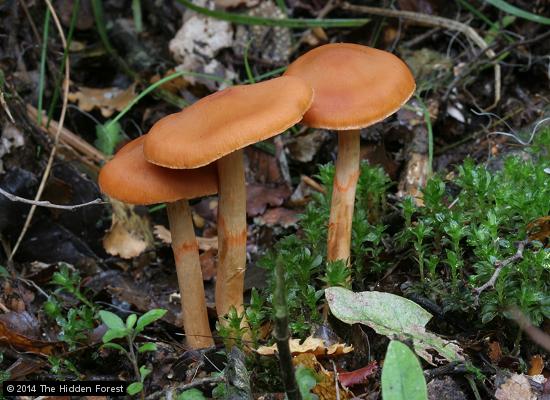
A small to medium-sized, brightly coloured yellow–orange cortinarius, originally described from New Zealand and now placed in Aureonarius following the 2022–2024 Cortinariaceae revision. It is characterised by its vivid pigments, rust-brown spores, and a persistent cortina that often leaves orange-rust fibrils on the stipe.
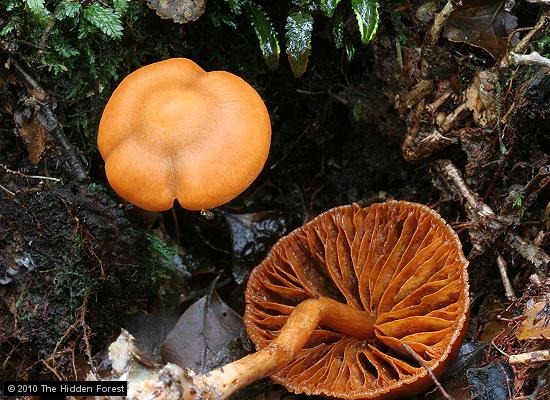
Cap: 20–50 mm diam., convex to plano‑convex; surface dry, smooth to finely fibrillose; colour bright yellow‑orange to deep orange, sometimes with a darker disc. Margin often paler and faintly fibrillose from veil remnants.
Lamellae: adnate to adnexed, moderately crowded; initially bright yellow‑ochre, later deep rust‑brown as spores mature; edges even.
Stipe: 30–70 × 5–12 mm, cylindrical or slightly clavate; surface yellow to orange‑ochre, often with orange‑rust cortina fibrils or a diffuse annular zone. Flesh yellowish, unchanging.
Veil: a well‑developed cortina, yellowish at first, becoming rust‑brown as spores accumulate.
Common name: None
Habitat: Nothofagus forests.
Substrate: Ground
Distribution:
New Zealand wide.
Season: autumn to early winter
Biostatus: Endemic to New Zealand.
Edible:No
Spore print:
Brown