E. Horak 1971
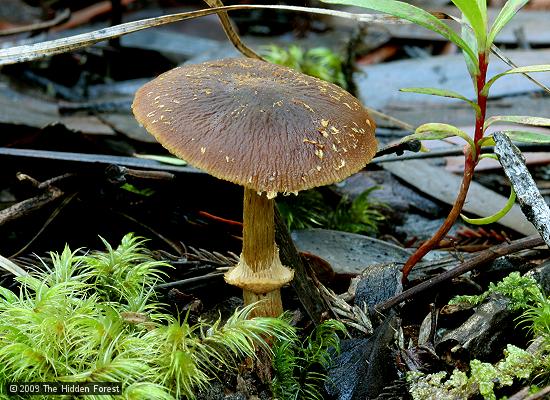
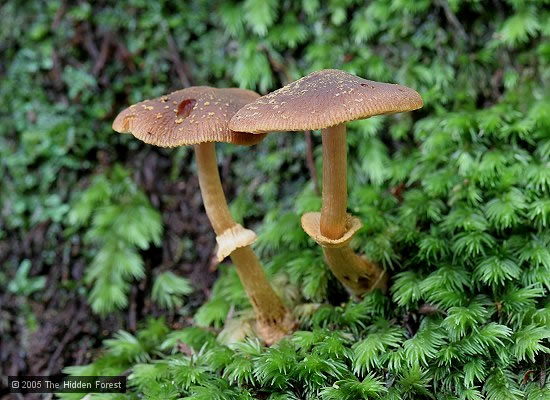
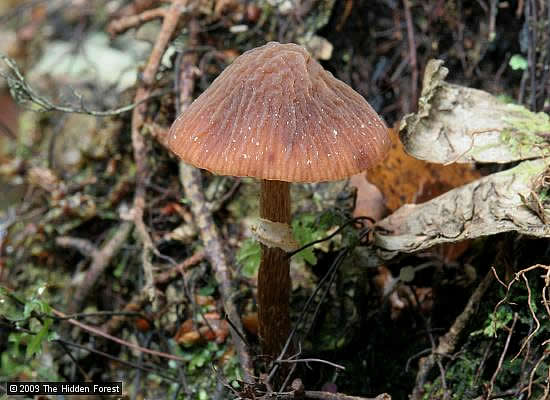
Descolea phlebophora is an indigenous New Zealand ectomycorrhizal species in the Bolbitiaceae, easily recognised by its deeply wrinkled, radially veined cap, white velar bands on the stipe, and verrucose amygdaliform spores. It is closely related to Descolea sp.but differs in several consistent macroscopic traits.
Cap:
10-30 mm diameter.
Hemispherical when young, later campanulate or umbonate, rarely expanding flat.
Reddish-brown, liver-brown, or dark honey-brown.
Dry, hygrophanous.
Distinctively wrinkled and radially veined at the centre, a key diagnostic feature.
Striate near the margin.
No veil remnants on the cap.
Gills: Adnexed, crowded.
Pallid brownish to ochraceous to rusty brown at maturity.
Whitish, finely fimbriate gill edges.
Stipe: 30-70 x 2-6 mm, cylindrical or slightly tapering upward.
Solid, later fistulose.
Dry, densely covered in white silky fibrils.
Several conspicuous white bands of the universal veil near the base (important for identification).
Persistent white, striate ring (sometimes smooth).
Common name: None.
Habitat: Nothofagus Occasionally Myrtaceae forests.
Substrate: Ectomycorrhizal, occurring among litter.
Distribution: New Zealand wide.
Season: Autumn.
Biostatus: Indigenous.
Edible: No.
Spore print: Brown–ochraceous.