(Bull.) Quél. (1872)
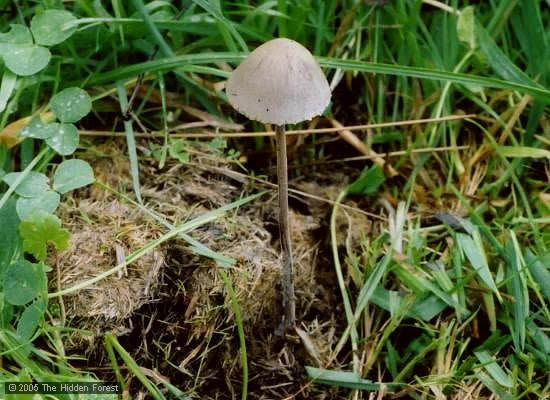
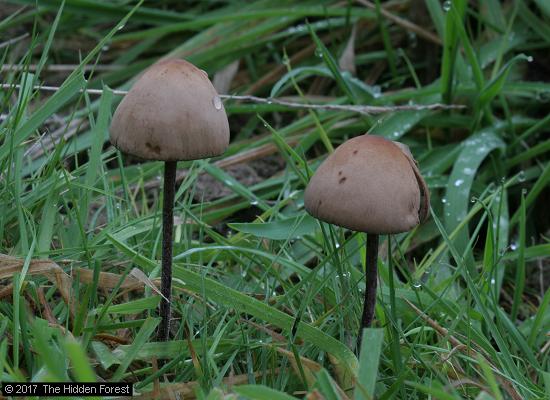
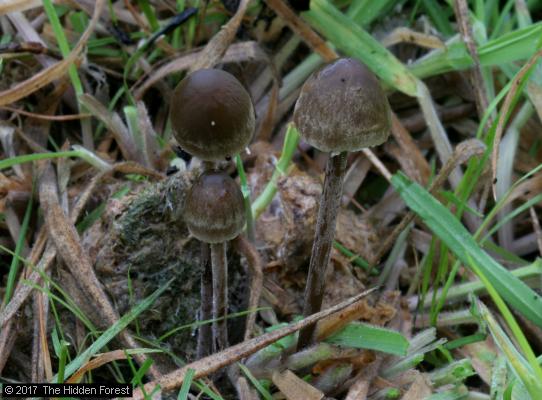
Panaeolus papilionaceus is a small, coprophilous, black-spored mushroom recognised by its bell-shaped cap, mottled gills, and the distinctive white, tooth-like veil fragments that hang from the margin. It is inedible and non-psychoactive.
Cap: 10-30 mm across; obtusely conical to bell-shaped with age.
Whitish, grey, brownish, or reddish-brown; may develop fine cracks or raised ridges.
Dry, smooth to silky; sometimes finely hairy in age.
Margin often adorned with white, tooth-like veil remnants (“petticoat”).
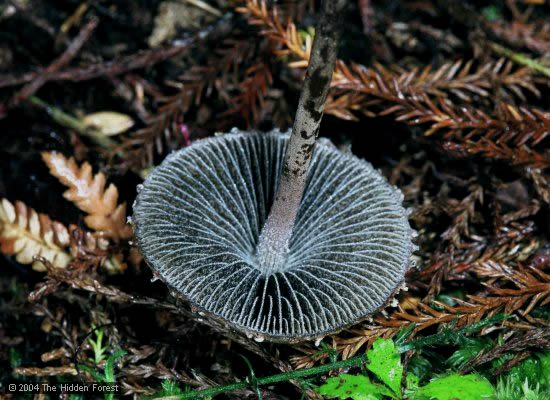
Gills: Attached or pulling away from the stem with age.
Close to crowded.
Start greyish, then develop black mottling, eventually black overall; edges remain whitish.
Stipe: 40-100 mm x up to 5 mm, slender, brittle.
Finely hairy, coloured like the cap but paler at the apex, darkening or reddening toward the base.
No ring.
Flesh: Very thin and insubstantial.
Common name: Petticoat Mottlegill.
Habitat: Pastures, meadows, and grazed land.
Substrate: Saprobic, growing alone to gregariously on horse and cow dung.
Distribution: Widespread and common.
Season: Spring–autumn.
Biostatus: Exotic
Edible: No.
Spore print: Black.