(Bull.) Fr. (1838)
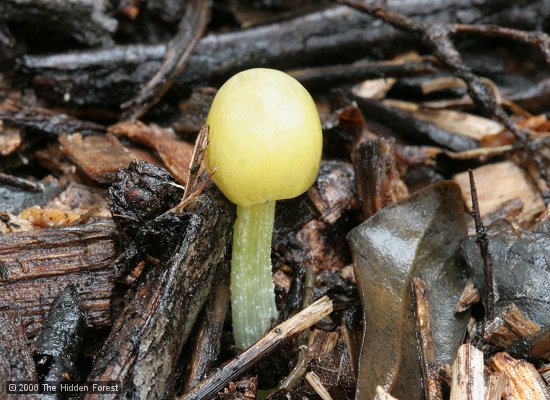
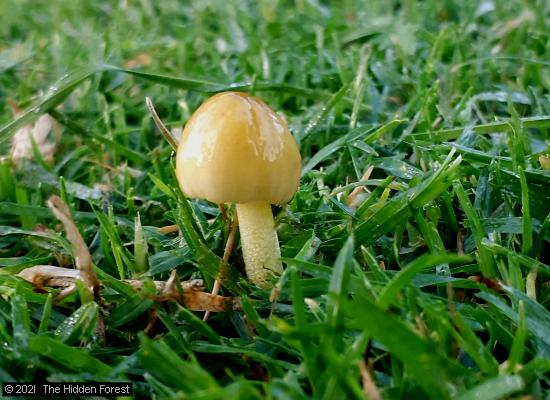
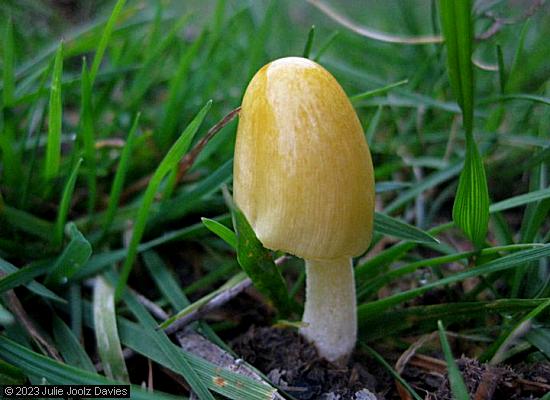
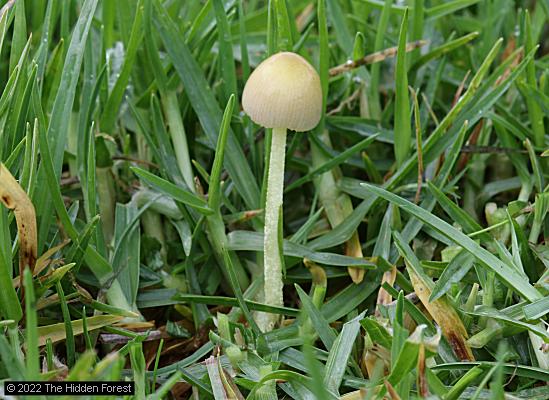
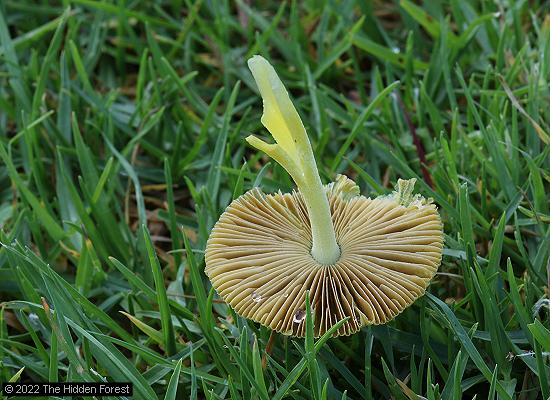
Bolbitius titubans is a small, fragile, bright-yellow, short-lived agaric distinguished by its viscid egg-yolk cap, deeply striate margin, and cinnamon-brown spores. Appears alone, scattered, or in small groups and is widespread globally. Extremely short‑lived-often collapsing within hours.
Cap: 15-70 mm across; egg-shaped when young, becoming convex to flat, sometimes with a slight central depression.
Bright yellow to egg-yolk yellow when fresh; fades rapidly to brownish, tan, or greyish-white with age.
Very viscid when moist; strongly striate almost to the centre at maturity.
Thin-fleshed and extremely fragile.
Gills: Free or narrowly attached; very soft and fragile. Start whitish or pale yellow, becoming rusty‑cinnamon brown as spores mature.
Stipe: 30-120 mm x 2-6 mm; slender, hollow, very delicate.
Whitish-yellow, often with a fine mealy or floccose coating.
No ring or veil remnants.
Common name: None.
Habitat: Urban landscaping gardens and grasslands.
Substrate: Saprobic on dung, heavily manured grass, compost, straw, woodchips, and decaying plant matter.
Distribution: New Zealand wide.
Season: Autumn.
Biostatus: Exotic.
Edible: No.
Spore print: Cinnamon-brown to ochre-brown.