Bolbitius muscicola
Description:
Bolbitius muscicola is a New Zealand endemic member of the Bolbitiaceae distinguished by its brown-spotted, viscid cap, slender pale stipe, and Bolbitius-type spores with a broad germ pore. It is unusual within the genus because it is associated with Nothofagus forest, not grass or dung.

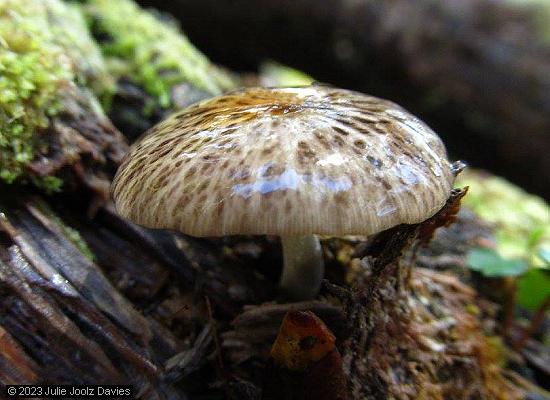
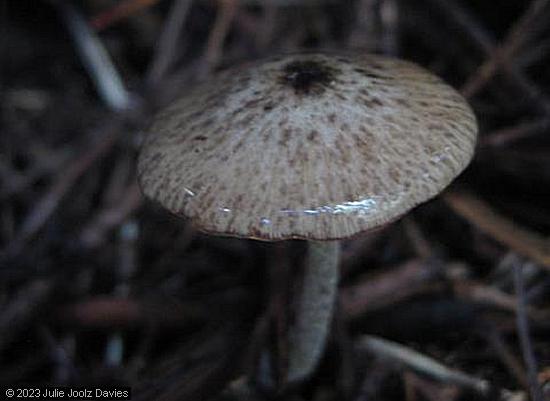
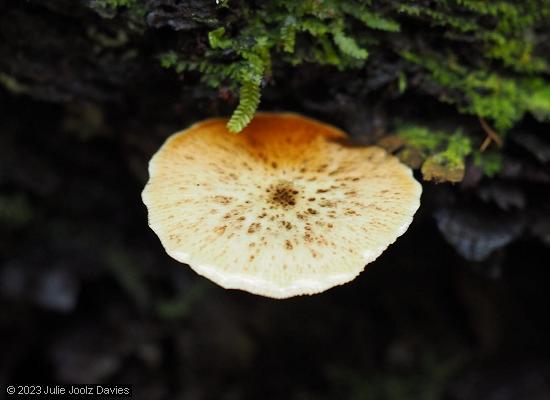
Cap: 10-30 mm across; convex to plano-convex, sometimes slightly depressed. Brown to ochraceous-brown, often with darker spots or patches. Viscid when moist; surface smooth. Margin not strongly striate.
Gills: Free to narrowly attached. Pale at first, becoming rust-brown to ochraceous as spores mature.
Stipe: 30-70 mm x 1.5-3 mm; slender, hollow, fragile. Whitish to pale yellowish, sometimes with fine fibrils. No ring or veil remnants.

Common name: None.
Habitat: Nothofagus forest.
Substrate: Saprotrophic, native forest litter.
Distribution: New Zealand wide.
Season: Autumn.
Biostatus: Endemic.
Edible: No.
Spore print: Rust‑brown to ochraceous‑brown.
Macro images:
Panaeolus foenisecii
Scale bar
Scale= 5 mm.
 
Panaeolus foenisecii
Scale bar
Scale= 6 mm.
 
Panaeolus foenisecii
Scale bar
Scale= 10 mm.
 
The Hidden Forest
Forest Fungi