Amanita pareparina
G.S. Ridl. 1991
Description:
PDD 81484
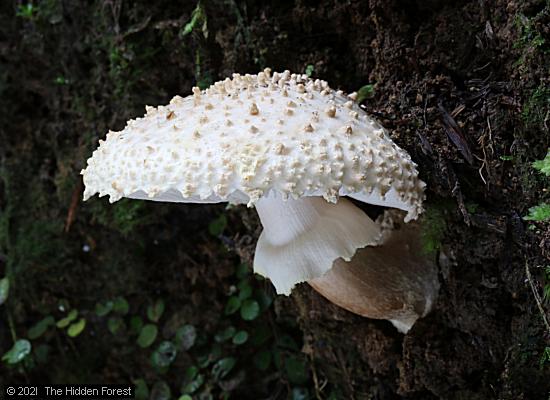
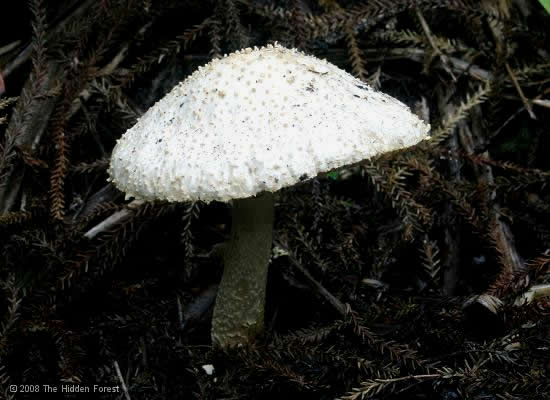
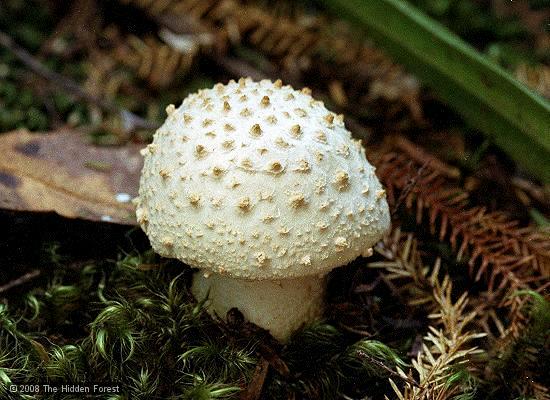
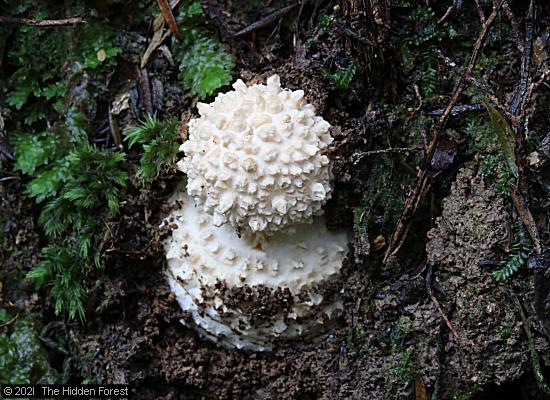
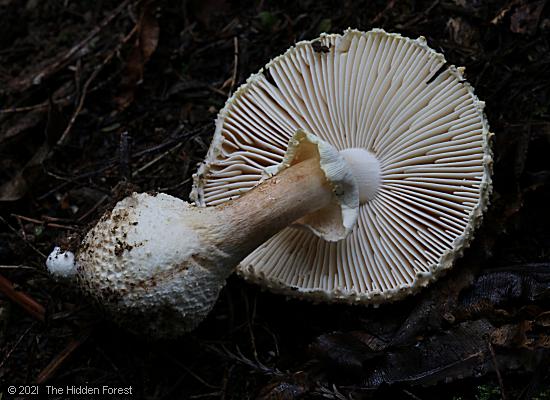
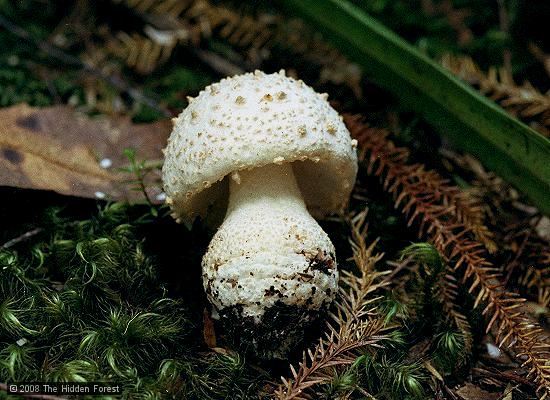
Cap: 20-80 mm diameter, convex to plano‑convex, sometimes slightly depressed in age. Colour pale buff, pale grey‑buff, or greyish‑sepia, often darker at the disc. Surface dry, not viscid. Universal‑veil remnants appear as fine, powdery to granular patches, sometimes forming low, irregular warts. These are greyish sepia to fuscous, giving the cap a muted, dusty appearance. Margin distinctly striate, sometimes splitting.
Gills: White to pale buff, free, moderately crowded. Short gills subtruncate. Edges smooth to slightly uneven.
Stipe: 25-70 mm tallx 4-10 mm thick, hollow or partially hollow. Colour white to pale buff or pale greyish sepia. Upper stipe smooth to faintly floccose; lower stipe smooth. Base clavate to slightly bulbous (8-15 mm wide). No ring (exannulate).
Volva: Present as a rim or band of powdery, greyish sepia volval material at the stipe base. Volval cells are globose to ellipsoid, often finely encrusted—similar to A. nehuta but generally finer and paler.

Common name: None
Habitat: Nothofagus and Myrtaceae forests
Substrate: Fruiting singly or in small groups on soil
Distribution: New Zealand wide
Biostatus: Endemic
Season: Autumn
Height: 80 mm
Width: 50 mm
Edible: Poisonous
Spore print: White
Macro images:
Amanita pareparina
Scale bar
PDD 81484    Scale= 7.6 mm.
 
Amanita pareparina
Scale bar
Scale= 12.5 mm.
An old fruiting body at the end of it life
Amanita pareparina
Scale bar
Scale= 5.2 mm.
 
Amanita pareparina
Scale bar
Scale= 10 mm.
 
Amanita pareparina
Scale bar
Scale= 10 mm.
 
Amanita pareparina
Scale bar
Scale= 10 mm.
 
Hidden Forest
Fores Fungi