L. 1753
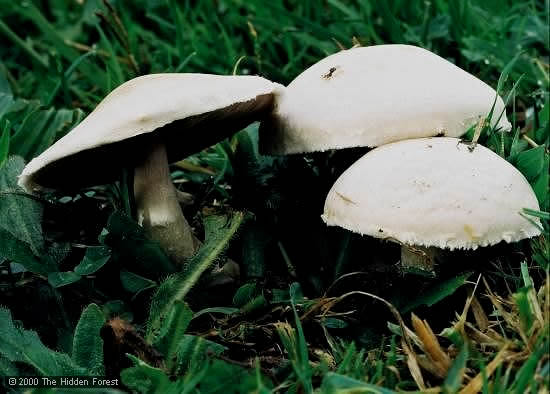
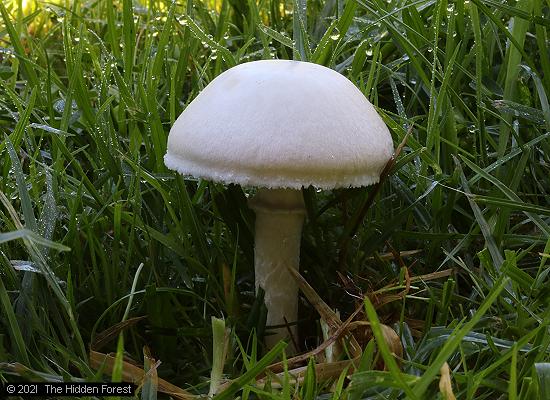
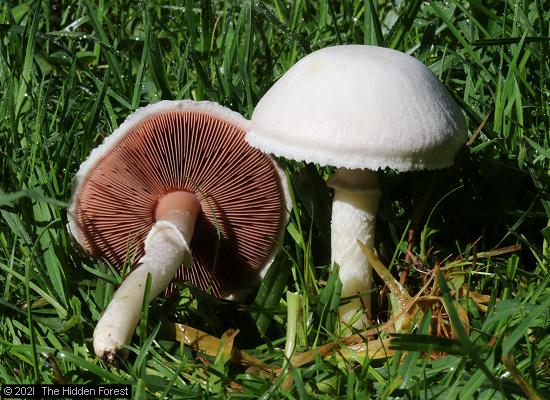
A small to medium‑sized Agaricus of pastures, lawns, and open grassland, recognised by its pink to chocolate‑brown gills, thin fragile ring, white cap, and non‑phenolic odour. Common and widespread in New Zealand, especially in grazed paddocks. Yet there is some confusion about whether the species was introduced into NZ or an unnamed native species. Regardless, they all taste good.
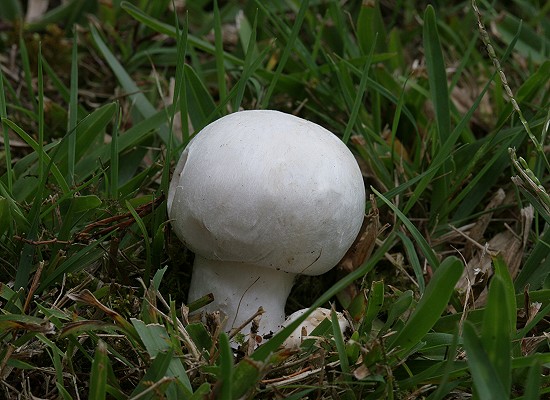
Cap: 30-100 mm diam.; hemispherical becoming convex to flat; surface smooth, silky, or finely fibrillose; white to cream, sometimes faintly brownish in age; margin often slightly inrolled when young.
Gills: free, crowded; pink when young, becoming dark chocolate‑brown at maturity; edges even.
Stipe: 40-80 x 8-20 mm; slender to moderately stout; white, smooth or finely fibrillose; base not bulbous.
Ring: thin, fragile, often disappearing with age; sometimes barely visible in mature specimens.
Context: white, soft; does not yellow strongly when cut (may show faint, slow yellowing in some forms).
Odour: mild, pleasant, mushroomy; no phenolic or almond smell.
Common name: Field Mushroom.
Habitat: Pastures, lawns, road verges, and parkland.
Substrate: Saprobic on rich grassland soils.
Distribution: Common and widespread throughout the country.
Season: Autumn.
Biostatus: Introduced but long naturalised.
Edible: Yes.
Spore print: Dark brown.