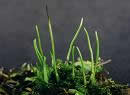
 The sexual reproduction of hornworts is similar to that of other bryophytes. In some species they have separate male and female plants, In others the male (antheridium) and female (archegonium) sexual organs are on the same plant.
The Archegonia and Antheridia are embedded, either partially or completely, in the central region of the upper surface of the thallus. As the antherida matures, the antheridial cavity breaks down in response to water. The motile sperm are chemically attracted to the eggs contained in the base of the archegonia, which swim through the surface water to fertilize the female eggs (gamete).
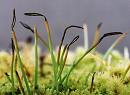 The fertilized embryos (zygotes), are scattered over the plant and grow into the next generation of sporophytes. The sporophyte, which is horn-shaped, grows from a basal sheath beneath the surface of the gametophyte thallus, and continues to grow throughout the life of the sporophyte. As the tips mature they split into two halves lengthwise, and release their spores.
The hornwort germinates directly from the spores, producing a flat thalloid plant with a greasy blue-green colour, which is the next generation of gametophyte.